













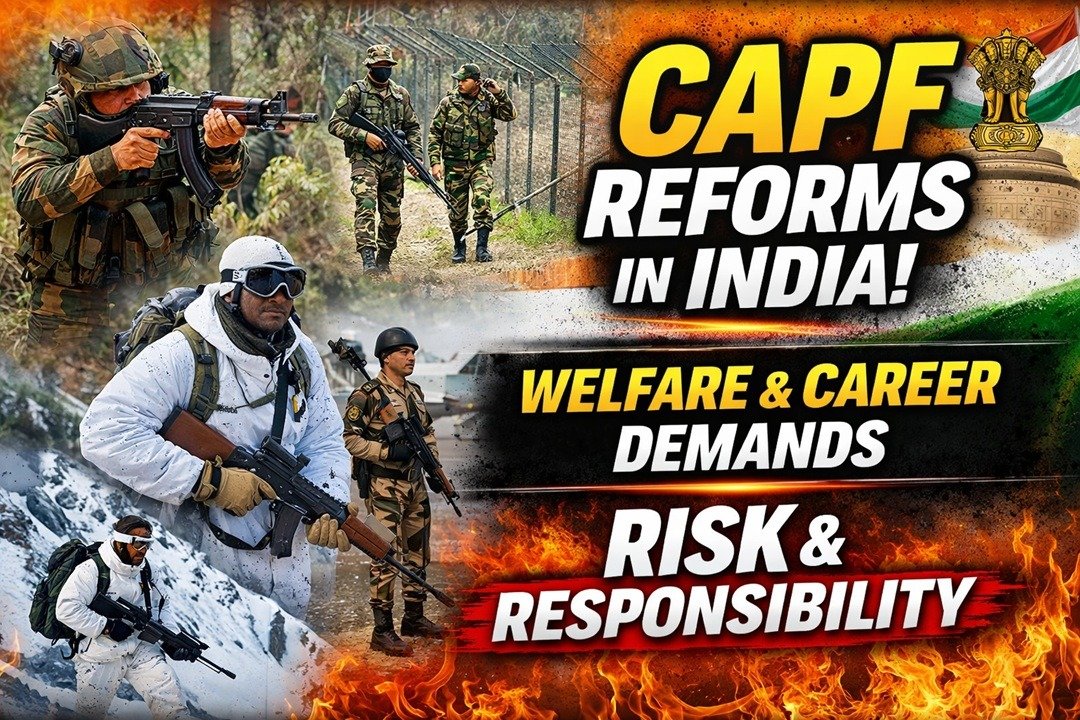
Our incredible country India’s internal security framework relaxations significantly on the strong shoulders of the Central Armed Police Forces (CAPF), which includes forces such as CRPF, BSF, ITBP, CISF, and SSB. These forces operate many times in the most challenging environments, ranging from insurgency-hit regions to high-altitude borders, and from election duties to riot control. Despite their critical role, there remains an ongoing debate about whether their welfare, career progression, and institutional recognition adequately reflect the risks they undertake.
In this article myself argues that CAPF personnel demands for improved welfare and career growth are not only justified but necessary also. At the same time, it proposes a balanced approach where government control remains intact while operational and administrative powers are appropriately delegated, and CAPF is accorded a distinct status that ensures high morale without equating it entirely with the Armed Forces.
Understanding the Nature of CAPF Duties
The operational landscape of CAPF is uniquely demanding and diverse. Unlike conventional military forces that primarily deal with external threats, CAPF handles internal security challenges that are often unpredictable and prolonged.
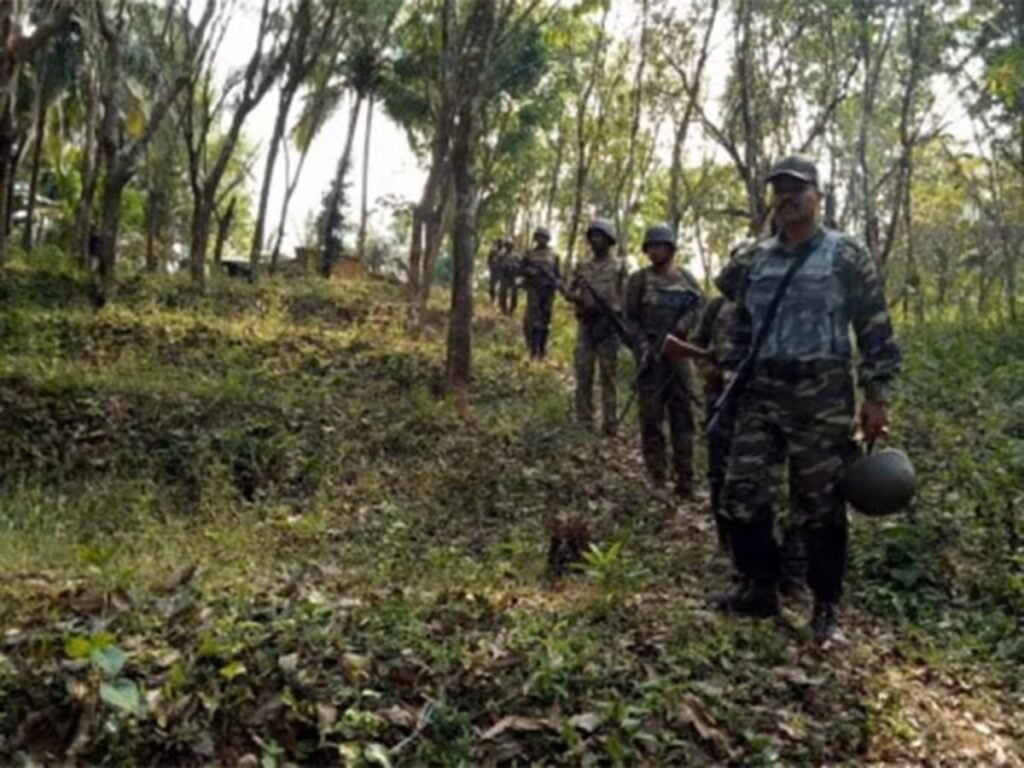
- Counter-insurgency operations: Forces like CRPF are deployed in Naxal-affected regions where they face guerrilla warfare, ambushes, and hostile terrain.
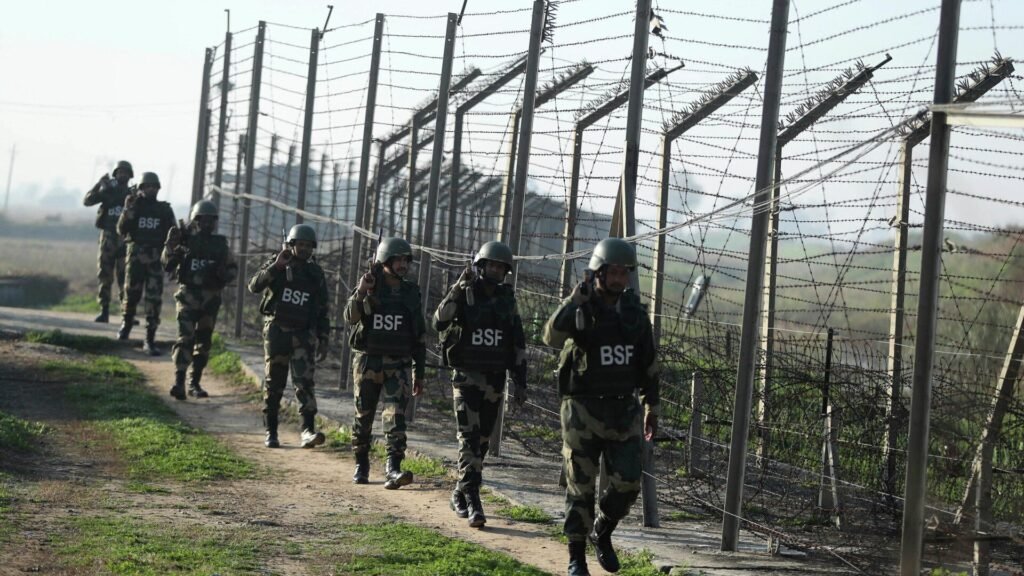
- Border guarding: BSF and ITBP operate in extreme conditions, including deserts and high-altitude Himalayan regions, often under severe weather constraints.
- Election duties: CAPF ensures free and fair elections across the country, involving large-scale, high-pressure deployments.
- Law and order management: Riot control, protest handling, and urban security operations require constant readiness.
- Infrastructure security: CISF protects critical installations such as airports, metro systems, and industrial units.
A key distinguishing factor is the continuous deployment cycle. CAPF personnel often face relentless rotation pressures, sometimes exceeding those experienced by the Army. This leads to prolonged separation from families, high stress levels, and limited recovery time.
👉 In essence, the equation is clear:
Risk + Workload = Exceptionally High
Why CAPF Welfare Demands Are Justified
Given the intensity of their duties, CAPF personnel demands for better welfare are both logical and necessary.
- Risk-Based Compensation
CAPF personnel frequently operate in life-threatening situations. However, their compensation structure does not always proportionately reflect the risks involved. A more dynamic, risk-based allowance system is essential to acknowledge their sacrifices.
- Family and Social Support
Frequent transfers and long deployments disrupt family life. Improved housing, education support for children, and accessible healthcare facilities are critical for maintaining stability.
- Mental Health Considerations
Continuous exposure to high-stress environments can lead to psychological strain. Structured mental health programs, counselling, and periodic rest cycles are essential components of a modern security framework.
Career Progression and Structural Challenges
One of the most pressing concerns within CAPF is the issue of career stagnation.
- Promotions are often slow and inconsistent.
- Opportunities for leadership roles are limited.
- The deputation system, particularly involving Indian Police Service (IPS) officers, can restrict the growth of cadre officers within CAPF.
This creates a perception of inequality and affects morale. A professional force cannot function optimally if its members feel their growth is constrained despite their contributions.
The Debate on Status: Army vs CAPF
A central issue in the discourse is whether CAPF should be granted the same status as the Armed Forces. While this demand stems from legitimate concerns, a full equivalence may not be practical.
- The Armed Forces are structured for external defence, whereas CAPF focuses on internal security.
- Command structures, legal frameworks, and operational doctrines differ significantly.
- Complete parity could lead to administrative and strategic complications.
However, this does not negate the need for recognition and respect. CAPF deserves a distinct and elevated status that reflects its unique role without disrupting the broader security architecture.
A Balanced Reform Model
To address these challenges, a middle path is essential—one that combines welfare enhancement, structural reform, and administrative clarity.

- Distinct Institutional Status
CAPF should be recognized as a separate pillar of national security. This status should bridge the gap between police forces and the military, ensuring dignity and identity.
- Delegation of Powers
While the government must retain overall control, operational and administrative powers should be delegated more effectively to CAPF leadership. This includes:
- Greater decision-making authority for cadre officers
- Decentralized command structures for faster response
- Reduced over-dependence on deputation
- Leadership Reforms
A balanced leadership model should be adopted, where both IPS and CAPF officers have equitable representation. This will ensure diversity of experience while preserving institutional knowledge.
- Enhanced Welfare Measures
- Risk-linked allowances
- Improved housing and healthcare
- Structured leave policies
- Comprehensive mental health support
- Transparent Career Pathways
Time-bound promotions, merit-based evaluations, and clear progression paths will help to restore confidence among personnel.
National Interest and Strategic Impact
The strength of any security system lies not only in its structure but also in the morale of its personnel. A force that feels valued and supported is more likely to perform effectively under pressure.
By addressing CAPF’s concerns:
- Operational efficiency will improve
- Response times will be faster
- Personnel retention and motivation will increase
Ultimately, a satisfied and empowered CAPF contributes directly to a more secure and stable nation.

My Suggestions
CAPF personnel operate in some of the most demanding and uncertain conditions in India’s security landscape. Their responsibilities are immense, and their sacrifices often go unrecognized. While granting them full Armed Forces status may not be a practical solution, ignoring their legitimate demands is equally untenable.
The way forward lies in creating a system that acknowledges their unique role, enhances their welfare, and provides them with fair career opportunities. By maintaining government control while ensuring proper delegation of powers and granting a distinct institutional status, India can build a more robust and motivated internal security force.
When responsibility is extraordinary, the system supporting it must be equally exceptional.